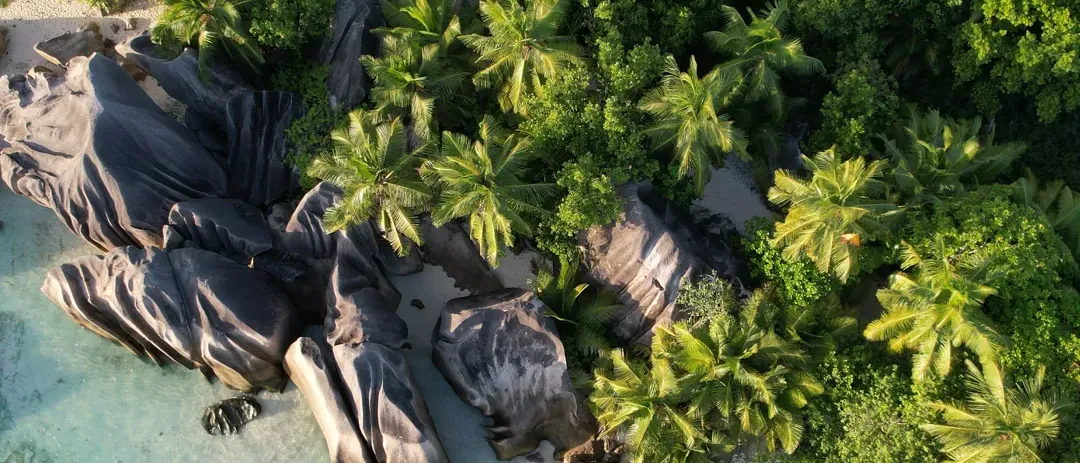

The Seychelles has no bad season — but wind, swell and tide make some months noticeably easier on the water than others.
The short answer
La Digue sits close to the equator, so temperature barely moves: air stays roughly between 24 and 32 °C all year, and the sea holds around 26–29 °C. You will never need a wetsuit.
What changes is the wind. The Seychelles runs on two trade-wind seasons, and they shape sea conditions far more than rainfall does. If you are choosing dates specifically for time on the water, April, May, October and November are the most reliably calm.
The two trade-wind seasons
From roughly November to March the north-west trades bring warmer, more humid air and the heaviest rainfall, usually in short intense bursts rather than all-day grey. Seas are often gentle on the west and south-west coasts, which is where Anse Source d’Argent sits.
From roughly May to September the south-east trades bring cooler, drier and noticeably windier weather. Exposed eastern beaches like Grand Anse pick up real swell, while the sheltered west coast stays far more workable.
- November–March: warm, humid, short heavy showers, generally calmer west-coast water
- May–September: cooler, drier, windier, bigger swell on exposed coasts
- April and October: transition months, often the calmest seas of the year
Why the tide matters more than the month
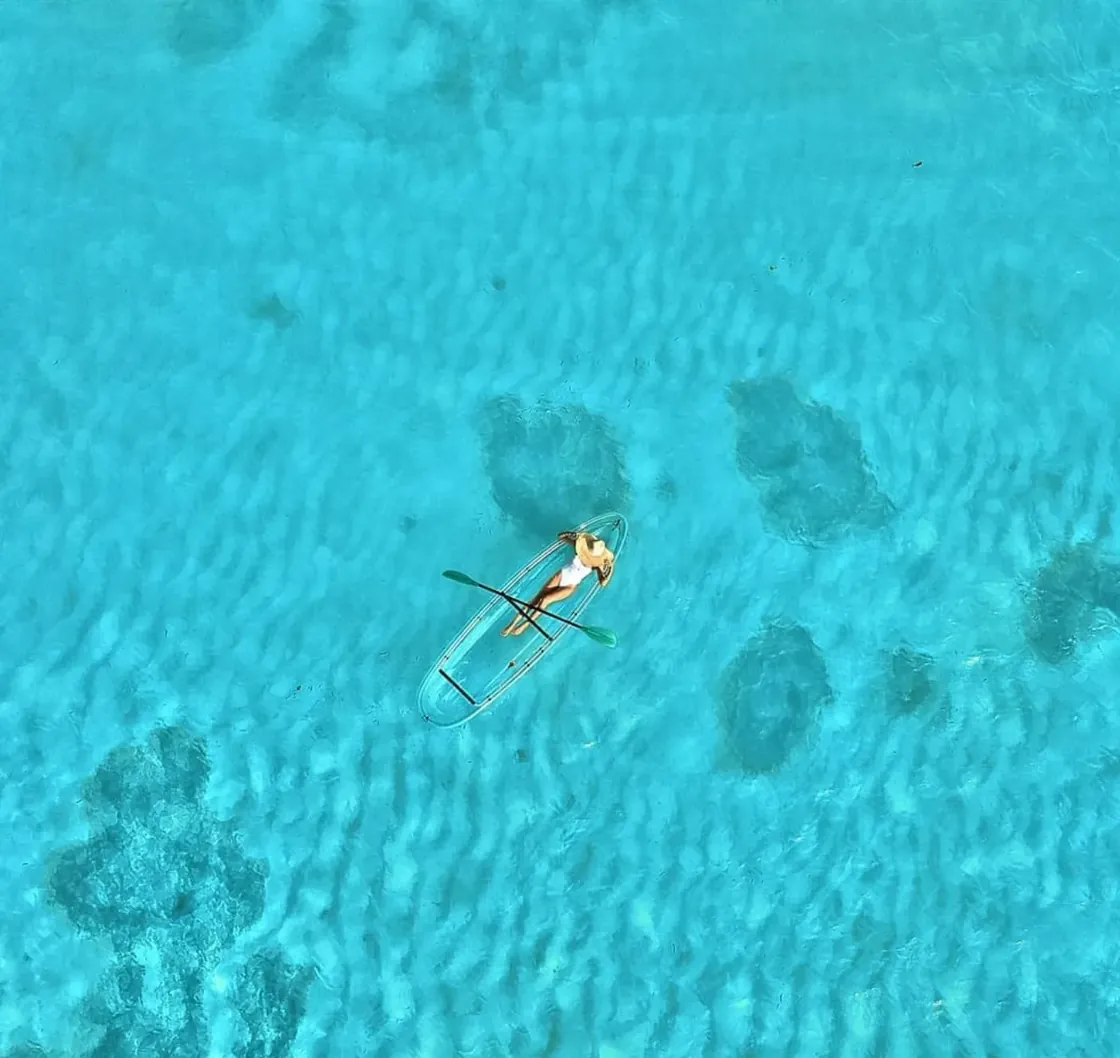
Anse Source d’Argent sits behind a very shallow reef flat. At low water, large parts of the lagoon are too shallow to paddle without touching coral — which is exactly what nobody should be doing.
This is why the tour runs once per day at a start time set by the tide rather than at a fixed hour. Depending on your date the departure may be morning or afternoon, and the exact time is confirmed close to the day.
The practical consequence: pick your dates for the season, but do not build a rigid itinerary around a specific hour until the team has confirmed the tide window.
Crowds, light and photography
Anse Source d’Argent is one of the most photographed beaches in the world, and the middle of the day is when the day-trip boats land. Early and late departures are quieter both on the sand and on the water.
For photography, low-angle light in the first and last two hours of daylight does far more for granite and turquoise than midday sun. A tide window that falls early or late is a gift, not an inconvenience.
So which months should you book?
With complete freedom, aim for April, May, October or November: calm seas, comfortable heat and fewer extremes in either direction.
If your dates are fixed, come anyway. The west coast is sheltered year-round, and the tour adapts its route and timing to the conditions on the day — that flexibility is why it can run through most of the year.